Authentic Assessment: A Practical Guide for Educators
For many years, medical education has demonstrated that authentic learning environments and real-world learning tasks lead to strong learning outcomes. This is especially true in programs where entrustment plays a central role — where learners must demonstrate that they can be trusted to perform professional responsibilities independently.
In healthcare education, skills must be practiced repeatedly, deeply internalized, and demonstrably mastered.
For a long time, this approach was described as holistic education or holistic assessment. The content framework was often built around Entrustable Professional Activities (EPAs) or competencies, while the assessment framework followed principles of programmatic assessment.
In recent years, this model has increasingly been referred to as authentic learning and authentic assessment.
What Is an Authentic Learning Environment?
Australian researchers Jan and Anne Herrington conducted extensive research on authentic learning environments. Drawing on both theoretical and practical insights, they identified key characteristics: learning should be student-centered, realistic, and effective.
Authentic learning moves away from the traditional model of large lecture halls where experts transfer knowledge in small, pre-packaged segments to passive students. Instead, it reflects how learning actually takes place in professional practice.
In their article Authentic Learning Environments in Higher Education (2006), they describe nine essential elements:
- Authentic context
- Authentic activities
- Access to expert performance and modeling
- Multiple perspectives
- Collaboration
- Reflection
- Articulation of learning
- Coaching and scaffolding
- Authentic assessment
These elements create a learning experience that mirrors professional reality.
Auteurs:
Robert Smeenk en Roel Smabers
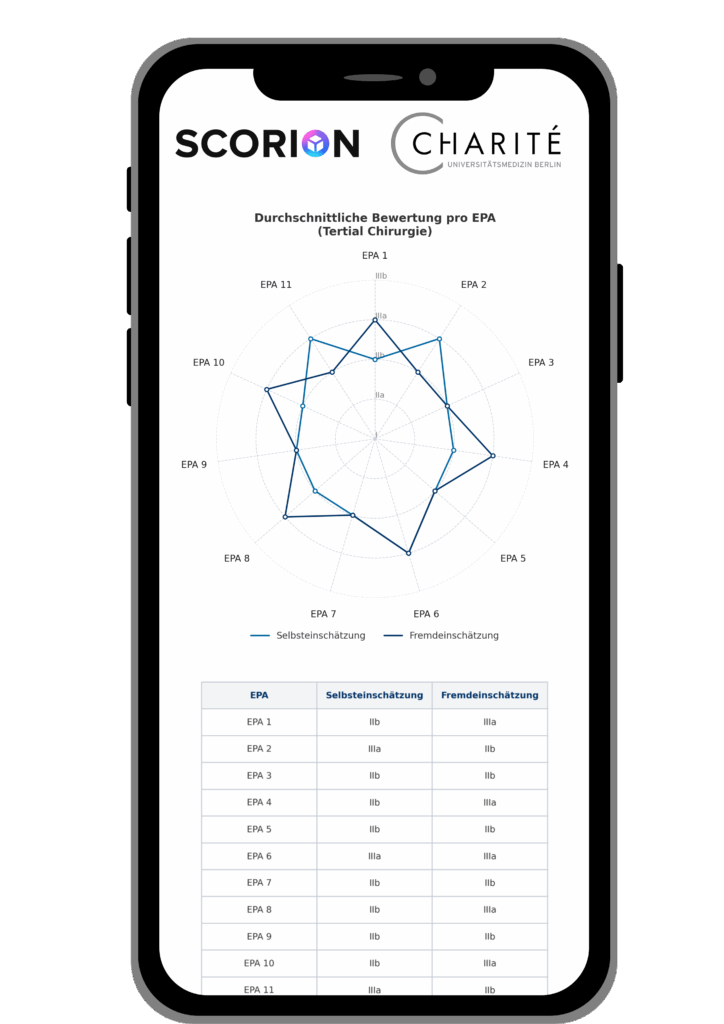
Figuur 1: EPAs in een authentieke leeromgeving
Generative AI and Authentic Learning
To date, authentic learning has been most widely implemented in medical and allied health education. However, the rise of Generative AI (GenAI) is accelerating broader adoption.
Traditional assessment methods are under pressure. As AI tools make it easier to generate written responses or complete standardized tasks, education must shift toward forms of assessment that evaluate what learners can actually do in real-world contexts.
Authentic assessment provides that solution.
This does not mean GenAI and authentic learning are incompatible. On the contrary, AI can support processes such as:
- Summarizing feedback
- Structuring recorded case discussions
- Analyzing dashboard data
- Supporting formative feedback processes
Used thoughtfully, AI can save time and support both learners and faculty.
At the same time, institutions are debating issues such as data security, ethical use, intellectual ownership, and the broader cognitive impact of AI. GenAI is not flawless. It can hallucinate, fabricate references, and produce inaccurate outputs. These limitations are widely acknowledged.
More importantly, authentic learning depends on reflection and articulation. These core learning processes cannot be outsourced to AI. They require human effort and cognitive engagement.
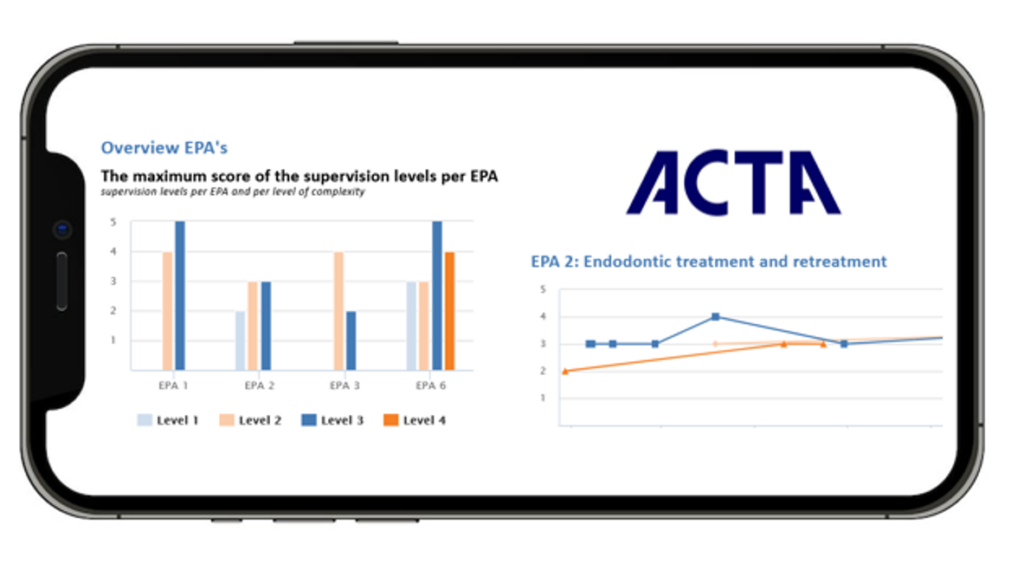
Figuur 3: voorbeeld van het Scorion portfolio in een authentieke leeromgeving van opleiding tandheelkunde ACTA Amsterdam Netherlands
Why Authentic Assessment Now?
Educational programs increasingly recognize that knowledge-based testing alone no longer delivers sufficient learning impact.
Research shows that active engagement leads to stronger learning outcomes. Authentic contexts increase student involvement and ownership of learning. That shift requires a different approach to assessment.
- Authentic assessment often includes:
- Open-ended tasks
- Multiple possible solutions
- Diverse pathways to competence
- Context-rich assignments
Theory without context has limited meaning. Real tasks in real environments create depth and integration. Fragmented learning objects often reduce complexity and weaken understanding.
As Aristotle observed long ago: the whole is greater than the sum of its parts.
Authentic learning integrates:
- Theoretical knowledge
- Practical skills
- Professional attitude and judgment
Medical education has been applying this integrated approach for years, and other disciplines are increasingly recognizing its value.
The Role of the Portfolio
Authentic assessment is difficult to implement without a supporting portfolio system. Assessment methods must align with the type of learning activity. This may include:
- Reflections
- Workplace-based observations
- Knowledge assessments
- Multi-source feedback
Learners must be able to reflect on their experiences, and feedback plays a central role. Assessment may also involve multiple assessors and multiple data sources. These data points collectively form a rich body of evidence that can be evaluated within a portfolio framework. A portfolio systematically collects evidence of performance, including:
- Observations
- Assessments
- Feedback
- Self-reflections
Visualizing this evidence through dashboards supports learner ownership and enables supervisors to monitor progress. Longitudinal tracking is particularly valuable for identifying patterns in development over time.
Choosing the Right Portfolio
When selecting a portfolio platform for authentic learning, several factors are critical:
- It must support individual learning pathways
- It should enable a wide variety of assessment processes
- It must not disrupt learning, but support it through intuitive design
- It should allow external workplace assessors to provide authenticated feedback without requiring full system accounts
- It must ensure data security and privacy
Authentic learning focuses primarily on the individual learner, even when certain assessments (such as OSCEs or peer evaluations) take place in group settings. Data must always be stored and visualized at the individual level.
A well-designed portfolio increases reliability without adding administrative burden.
Conclusion
Authentic assessment aligns education with professional reality. It strengthens engagement, integrates knowledge and skills, and supports meaningful reflection.
In an era shaped by AI and rapidly changing professional demands, authentic assessment is not just an innovation — it is a necessity.
Reference
Herrington, J. & Herrington, A. (2008). What Is an Authentic Learning Environment? Chapter 1.8
For more information: https://scorion.com
Misschien vind je dit ook leuk